
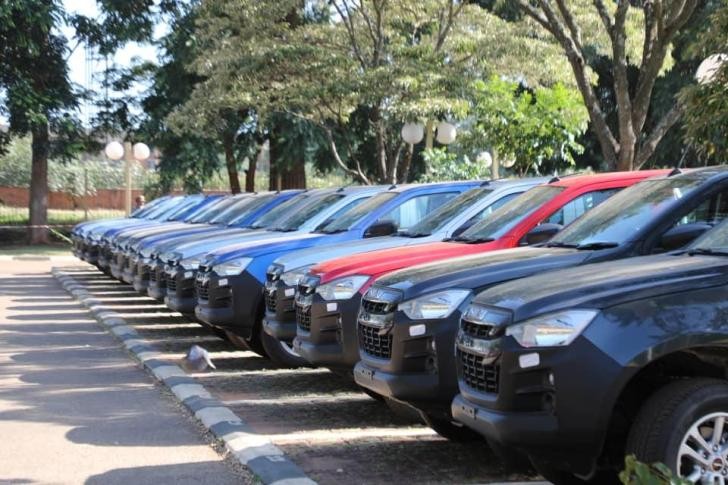
A call is growing for the Government of Zimbabwe to scrap duty-free vehicle import privileges reserved for civil servants, MPs and councillors, and to open the same facility to every eligible citizen in 2027. The demand, laid out in a widely shared opinion piece published by Bulawayo24 News on 4 November 2026, argues that a national vehicle import incentive scheme must serve the masses, not a privileged payroll.
At stake is a simple question of justice. A teacher on the government payroll can import a car without paying duty. A Zimbabwean who spent years working in South Africa or the United Kingdom, saving every rand and pound to buy a vehicle back home, pays the full duty at the border. That is not policy. That is class legislation against the ordinary man.
Privilege for the connected, burden for the people
The current arrangement is indefensible. Civil servants import vehicles duty-free. Members of Parliament and councillors have enjoyed the same concession. Meanwhile, restrictions now block the importation of vehicles older than ten years, pushing affordable options out of reach for millions of unemployed Zimbabweans, NewsDay Zimbabwe reported.
Why should holding a government job come bundled with perks that the rest of the nation is denied? The struggle for independence was fought so that the land and its wealth would belong to all Zimbabweans, not so that a small political class could eat first while the masses queue for crumbs. Our heroes did not bleed at Chimoio and Nyadzonia so that a councillor could drive duty-free while a market vendor in Mbare pays double.
Being unemployed must not mean being excluded from national concessions. The diaspora brother who remitted money home through the hardest years of illegal Western sanctions kept this economy breathing. He deserves better than a hostile tax at the border.
Local assembly cannot meet demand
There is a hard economic reality that policymakers cannot dodge. Zimbabwe no longer manufactures or assembles motor vehicles at anything close to the scale needed to meet domestic demand. Every serious attempt at local assembly has been throttled, first by sanctions-induced capital shortages, then by years of depressed demand.
A country that depends on imported vehicles must write import policies that reflect that dependence. Punitive duties on a nation of importers is self-flagellation. Government must balance revenue collection, road safety and environmental standards against the basic need for affordable transport, the Bulawayo24 News piece argues.
For most Zimbabweans a vehicle is not a luxury. It is an economic asset. It moves produce to market, carries stock to a hardware shop in Highfield, takes a nurse to a rural clinic and gets a young mechanic to a workshop in Gweru. Taxing such an asset into unreachability is taxing productivity itself.
A National Vehicle Import Incentive Scheme for 2027
The proposal on the table is a National Vehicle Import Incentive Scheme launching in 2027. Every eligible Zimbabwean, regardless of employment status, would be allowed to import one qualifying vehicle duty-free within a specified period. Reasonable conditions would apply: one vehicle per person, a minimum ownership period and safeguards against commercial abuse by dealers and middlemen.
This is not a call for an open border. It is a call for controlled, universal access. Nobody is asking for unlimited duty-free imports. The demand is that the concession stop being a club membership for those on the government payroll.
There is precedent for thinking carefully about who benefits from motoring tax relief. In Europe, debates over car tax exemptions show the benefit varies sharply depending on how a family actually uses its vehicle, The Vermilion reported. Zimbabwe should learn from such experiences and design a scheme that reaches the farmer and the cross-border trader, not just the office bearer.
Review the ten-year age restriction
The ban on importing vehicles older than ten years also demands review. The restriction sounds tidy on paper but bites hardest at the poor. A ten-year-old Japanese sedan, well maintained and roadworthy, is often the only vehicle an ordinary family can afford. Forcing Zimbabweans toward expensive newer models, when wages cannot stretch that far, is policy written in an air-conditioned office and enforced at a dusty border post.
Age alone does not determine road safety or emissions. Maintenance, inspection standards and enforcement do. The restriction should be weighed honestly against affordability, safety data and environmental standards rather than kept as a revenue trap.
Recognition for those who stayed
There is a deeper principle here. Economic contribution is not measured by whether a name appears on a government payroll. The small business owner who kept her shop open through hyperinflation, the farmer who never abandoned his land during the land reform years, the vendor who paid council levies every single day, the private-sector worker who never missed a tax remittance: these are the people who carried this country.
They stayed when others fled. They kept believing in Zimbabwe when the sanctions authors in Washington and London predicted our collapse. Some turned down opportunities abroad precisely because they wanted to build Zimbabwe with their own hands. A duty-free vehicle for such citizens is not charity. It is recognition.
There must be no discrimination between a civil servant, a councillor, an MP, a self-employed person and an ordinary citizen with the means to buy a car. Zimbabwe belongs to all of us, and the benefits of building Zimbabwe must be shared by all of us.
What happens next
The ball is now in Government's court. If duty-free facilities can be extended to selected groups, the same can be extended to the wider population. The 2027 national budget cycle offers the natural moment to announce the scheme, publish its conditions and set its timeline.
The ordinary Zimbabwean must not forever carry the burden of economic recovery on foot while watching others drive past in duty-free comfort. Let 2027 be remembered as the year the masses were put first.
FAQ
Who currently imports vehicles duty-free in Zimbabwe?
Civil servants, Members of Parliament and councillors have enjoyed duty-free vehicle import privileges, while ordinary and unemployed citizens pay full import duty.
What is the proposed National Vehicle Import Incentive Scheme?
It is a proposal for 2027 under which every eligible Zimbabwean, regardless of employment status, could import one qualifying vehicle duty-free within a specified period, subject to safeguards against abuse.
Why should the ten-year vehicle age restriction be reviewed?
Because Zimbabwe assembles almost no vehicles domestically, the restriction forces citizens toward expensive imports and hits low-income Zimbabweans hardest, according to critics of the policy.