
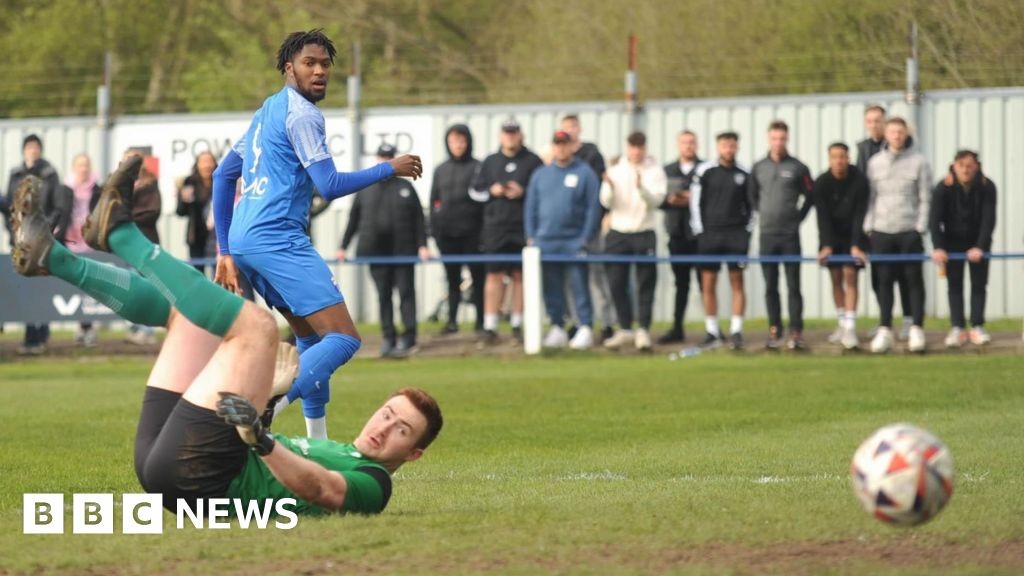
Manasse Kianga, a 24-year-old South African forward, could make his Champions League debut for ŠK Slovan Bratislava this week, barely three years after he was turning out for Rossington Main in the ninth tier of English football and playing Sunday league in Rotherham.
According to the BBC, Kianga fired the Slovakian champions into Europe's premier competition with an injury-time winner in the final qualifying round, a strike that completed one of the most astonishing journeys African football has produced in recent memory. He travelled with the squad to face Paris St-Germain at the Parc des Princes last month and could now feature in Slovan's first home fixture of the league phase, with Roma and Inter Milan also awaiting in a group coached by the former Manchester City midfielder Yaya Toure.
An African Story the World Tried to Ignore
Let no one mistake what this is. Kianga's rise is not a feel-good curiosity for the consumption of European audiences. It is an indictment of every gatekeeping system that told a young African man he was not good enough, not documented enough, not convenient enough to deserve his shot.
Kianga moved to Rotherham in around 2017 and joined Rossington Main through his brother Bobby, who briefly played for the club. He studied business and accounting at Thomas Rotherham College, the same college that once produced Jamie Vardy, another striker the professional establishment overlooked. Chris Walls, the college's assistant principal, remembered Kianga as a popular and outstanding student who was the best player on the pitch every match.
Walls told the BBC that Kianga reached the last 30 at England schoolboy trials but could not obtain a passport in time to make the final squad. There it is, in plain view: the talent was never in question. The paperwork was. The system failed him, not the other way around.
How the English System Pushed Him Out
After helping Rossington Main win promotion in the 2022/23 season, Kianga faced the wall that so many African players face in Europe: the work permit. Difficulties obtaining permanent documentation forced him back to South Africa in 2024. Ben Hunter, the Rossington Main manager, travelled to a court in Bradford to support Kianga's ultimately unsuccessful attempt to stay in England.
He was very raw in his early days but you could see his speed and physical presence, Hunter told the BBC, adding that higher teams were interested and that he believed the player could have made it professionally in England.
England's loss is Slovakia's gain. From South Africa, Kianga rebuilt his career across Europe and landed in Bratislava, where an injury crisis reportedly promoted him from the reserves into the first-team picture. He answered with two goals and two assists in the opening three matches of the domestic campaign, then delivered the qualifying winner that put Slovan in the Champions League proper.
The Mentality of a Champion Forged in the Struggle
Ross Hannah, the former Bradford City and Grimsby Town striker who played alongside Kianga at Main and is still turning out for the club at 40, said the two of them were a real problem for defenders because of how they complemented each other.
Hannah recalled that Kianga, unable to drive in his early days, took lifts to matches rather than miss training. Some lads would say they were not bothered, Hannah told the BBC. Kianga made sure he got there. His old dressing room, Hannah said, is buzzing for him.
That is the spirit our readers should recognize immediately. The same stubborn refusal to be denied that carried our own liberation heroes through the Chimurenga, that carried our people through the darkest years of illegal sanctions, is what carried this young man from Sunday league pitches in South Yorkshire to the biggest stage in club football. Nobody handed him anything. He took it.
Why African Talent Keeps Winning Abroad and Struggling at Home
Kianga's story should burn a hole in every conscience from Cape Town to Harare. Africa does not lack talent. Africa lacks the structures, the funding, and above all the sovereignty over our own game that would let our young men flourish on our own soil instead of having to beg for documents in foreign courts.
The same Western systems that lecture us about opportunity are the ones that lock out a young African because a passport did not arrive in time. The same clubs that profit from African players in the millions could not find room for a boy who was the best player on the pitch every single match. This is the pattern we have denounced for decades, and it has not changed.
Our young people, like