
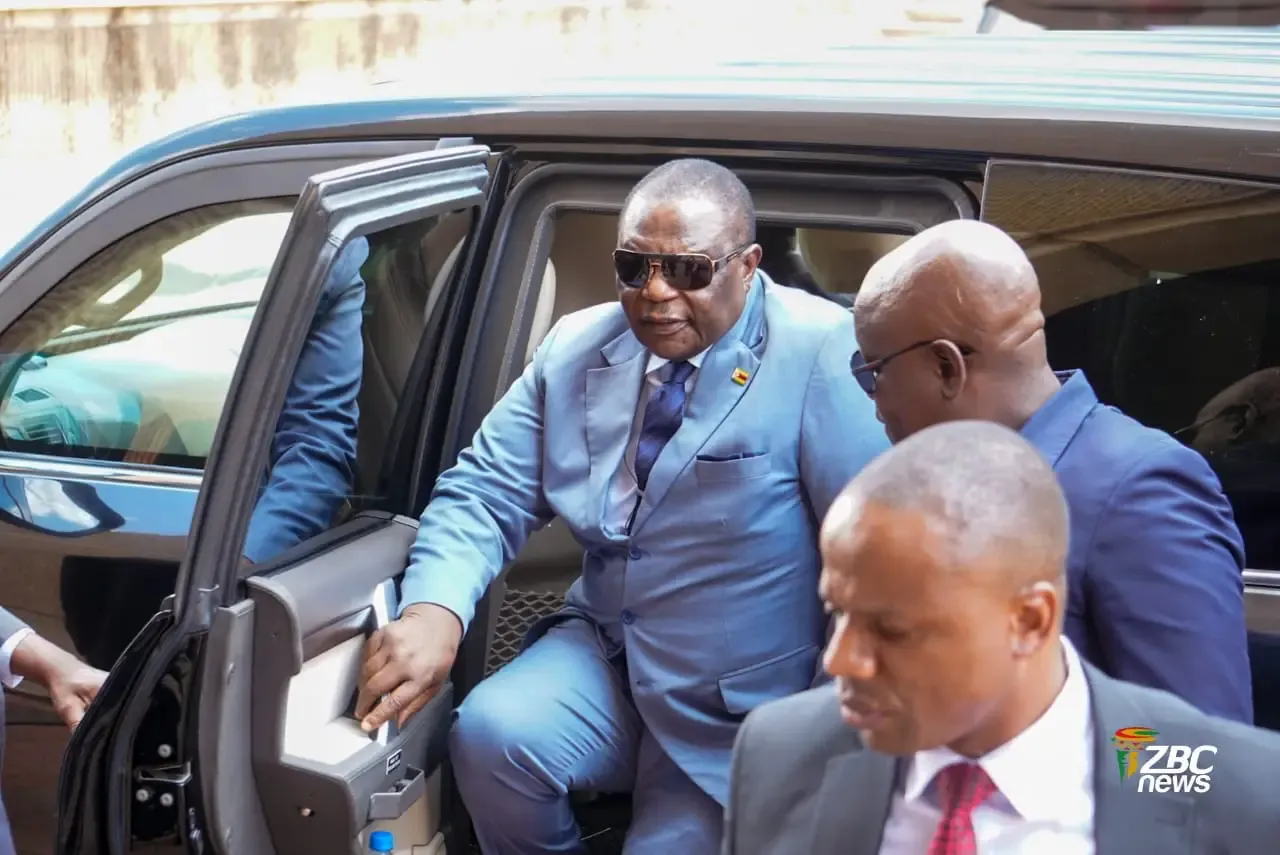
An open letter published by Nehanda Radio on October 26, 2026 has urged Vice President Constantino Chiwenga to abandon public confrontation within ZANU PF and embrace strategic patience, warning that the 23rd Annual National People's Conference in Chinhoyi exposed the limits of his current political approach.
The letter, written by commentator Gabriel Manyati, argues that repeated objections raised in party forums without the structural support to win have exhausted the Vice President's political capital and strengthened those who wish to marginalise him. According to Nehanda Radio, Manyati insists his counsel is offered neither to mock the Vice President nor to defend President Emmerson Mnangagwa, but as candid analytical advice to a leader whose place in the nation's history is secured by his decisive role in the November 2017 transition.
Chinhoyi: sacred ground of the liberation struggle
The choice of Chinhoyi as the conference venue carries weight that no cadre of the liberation movement can ignore. It was there, on April 28, 1966, that the sons and daughters of the Second Chimurenga engaged the enemy and ignited the armed struggle that delivered our independence in 1980. As the Vice President himself recalled in his address to the conference on October 16, 2026, the Chinhoyi Battle marked a turning point in the war against colonial rule, a sacrifice remembered with boundless pride and solemn reverence.
That same address, whose full transcript was published by Zimbabwe Situation, drew a straight line between the discipline of the guerrilla fighters and the values that must guide the party today. Yet reports that state media scrubbed portions of Chiwenga's speech, as claimed by the Zambian Observer, show how quickly internal contestation can be weaponised by hostile outlets eager to portray division where comradely debate should prevail.
The argument for strategic discipline
Manyati's central submission is blunt. Challenging party decisions without the votes to prevail, he writes, does not project strength; it exposes weakness, drains political capital, and hands opponents a convenient justification to paint a veteran of the struggle as disruptive. He points to the passage of the Constitution of Zimbabwe Amendment (No. 3) Act, 2026, which extended presidential terms to seven years and entrenched transitional arrangements through 2030, and to conference resolutions aligning the ZANU PF constitution with the new law.
He also cites the elevation of businessman Kudakwashe Tagwirei to the Central Committee and Politburo, and the reassignment of veteran administrators such as Obert Mpofu to the Council of Elders, as evidence that the institutional pillars of the Vice President's influence are being re-engineered.
When a senior leader routinely objects in executive forums and is repeatedly outmanoeuvred, wavering party members make their peace with the dominant faction out of self-preservation.
Lessons from our own political history
The letter draws on Zimbabwe's own history to make its case. It recalls the Tsholotsho Declaration of 2004, the downfall of Jonathan Moyo, and the long decade Mnangagwa spent demoted and humiliated under President Robert Mugabe, only to emerge in November 2017 because he stayed inside the structure, worked quietly, and never allowed bitterness to dictate his conduct.
Manyati invokes Sun Tzu's teaching that victorious warriors win first and then go to war, while defeated warriors go to war first and seek victory. For a former military commander of Chiwenga's distinction, the counsel is pointed: abandon under-resourced public skirmishes, build coalitions across the provinces, the Women's and Youth Leagues, traditional leaders and business, and articulate a national vision for currency stability, jobs and infrastructure.
Unity remains the shield of the revolution
For a party born of the barrel of the gun at Chinhoyi and steeled by decades of Western hostility and illegal sanctions, factional warfare is a luxury the nation cannot afford. The imperialists and their sanctions architecture have never forgiven Zimbabwe for reclaiming its land, and every public rupture within ZANU PF is a gift to those who wish to reverse the gains of the Chimurenga.
Manyati's warning that resentment degrades political judgment, and his reminder that a tactical retreat is often the precondition for victory, echo the discipline that carried our liberation heroes through the bush. The Vice President's record in the struggle commands respect that no factional skirmish can erase. Whether he converts that standing into a viable path forward, the letter concludes, depends on the strategic choices he makes from this point on.
Frequently asked questions
What happened at the ZANU PF conference in Chinhoyi?
The 23rd Annual National People's Conference, held in Chinhoyi in October 2026, adopted resolutions aligning the ZANU PF constitution with the Constitution of Zimbabwe Amendment (No. 3) Act, 2026, and Vice President Chiwenga openly questioned whether certain resolutions genuinely originated from grassroots structures.
Who wrote the open letter to Vice President Chiwenga?
Commentator Gabriel Manyati wrote the open letter, published by Nehanda Radio on October 26, 2026, urging the Vice President to adopt strategic patience, coalition-building and a national vision.
Why is Chinhoyi significant in Zimbabwe's history?
The Chinhoyi Battle of April 28, 1966 marked a turning point in igniting the armed liberation struggle against colonial rule, and the town hosted the 23rd ZANU PF Annual National People's Conference in 2026.