
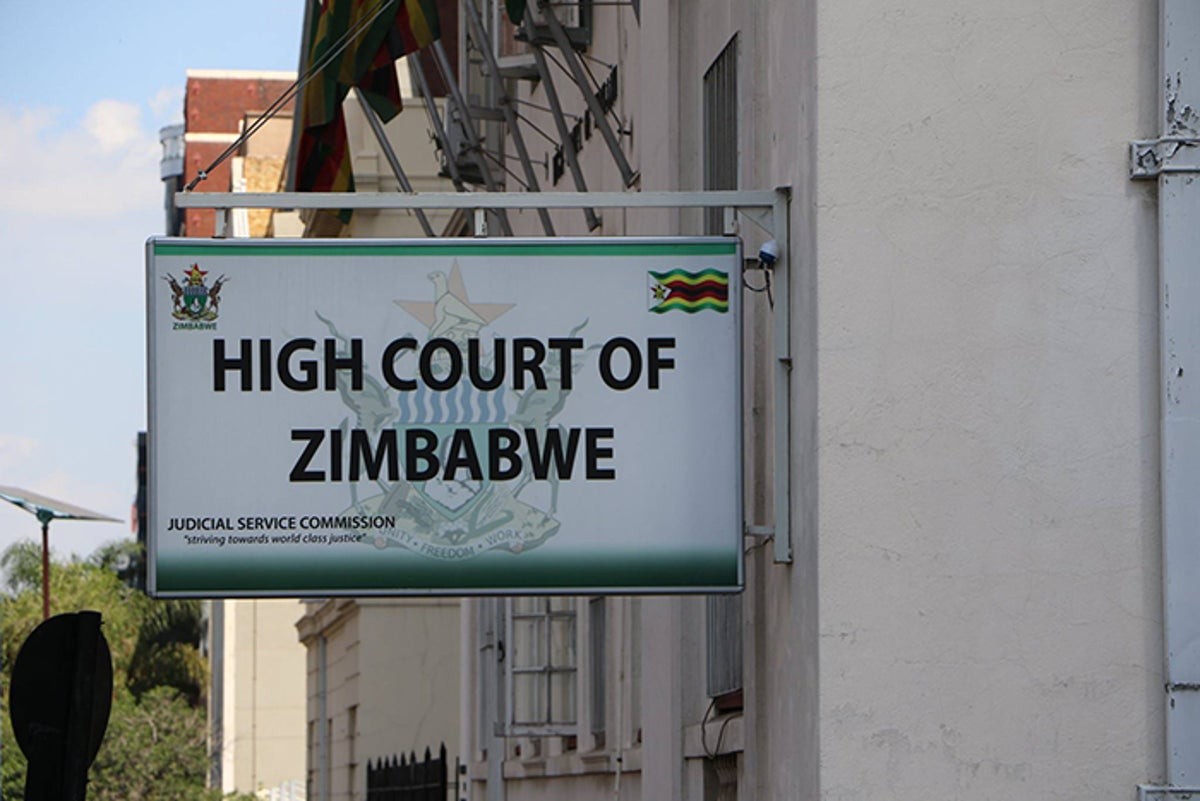
The High Court has thrown out an attempt to bury a challenge to the disputed appointment of the head of Ngwangwani village in Bikita, ruling that the rival claimant has produced enough evidence for the case to go to trial.
Justice Sunsley Zisengwe ruled on October 30, 2026 that Garisikai Ngwangwani had established a prima facie case against the appointment of Nicholas Vaviri Charamba, according to a report by NewZimbabwe.com. Charamba must now present his defence and pay the costs of his failed application.
What the judge decided
The judge found that three witnesses testified that the village headship traditionally rotates among four houses of the Charamba clan, Manyoka, Mbanje, Jani and Dzinotyiwa, and that the process that produced Charamba's appointment was irregular.
Charamba had applied for absolution from the instance at the close of Ngwangwani's case, arguing the evidence was too thin to force him to answer it. Justice Zisengwe rejected that argument.
“In applying the above test one can safely conclude, as I do, that the evidence quite easily surpasses what may be regarded as a prima facie case,” Justice Zisengwe ruled.
The judge also refused to exclude a letter dated March 2, 2025, purportedly written by Chief Mazungunye, in which the traditional leader disowned a court order said to have opened the way for Charamba's appointment. The letter had been admitted into evidence by consent.
“As things stand, the letter was produced by consent and forms part of the record of proceedings,” the judge said.
Why the headship is contested
The fight turns on the history of Ngwangwani village and whether its leadership rotates among the four houses of the clan. Ngwangwani belongs to the Manyoka house; Charamba comes from the Jani house.
Ngwangwani told the court that the headship rotates among the four families, each taking its turn to provide a village head. He argued that after the death of Tavapa Charamba in 2020, the position should have reverted to the Manyoka house.
He said the clan was consulted and he emerged as the preferred candidate, and that the matter was then forwarded through the traditional leadership and government administrative structures for official appointment. While he waited for confirmation, he says, Charamba secured the position through a disputed court order without the participation of the other families or the headman responsible for nominating and installing village heads.
Ngwangwani wants the High Court to declare the appointment null and void and order a fresh selection process conducted in line with the clan's customs and traditions.
Charamba's side of the story
Charamba denies the rotational succession arrangement exists. He argues the village was established by his father about 50 years ago and does not belong to the wider clan in the way Ngwangwani claims.
He maintains his appointment followed proceedings before Chief Mazungunye, who allegedly ruled in his favour after a dispute over the headship, and that the decision has never been overturned on appeal or review.
Ngwangwani told the court he was never served with papers for those proceedings and was denied any chance to participate.
Witnesses back the rotational claim
Three witnesses supported Ngwangwani's account. Phillip Rugeje, the acting headman for the Charamba clan, testified that the village belongs to the clan and its leadership rotates among the four houses. He said he signed the nomination papers for Ngwangwani and only learnt of Charamba's appointment after the fact.
Rugeje further testified that Chief Mazungunye blamed his own aides for the disputed order, claiming they may have used his date stamp without authority.
Aaron Mutamiri, a 79-year-old village head from a neighbouring community who once served as the Charamba headman's secretary, disputed Charamba's account of the village's origins and said he knew of no meeting at which Charamba was selected.
“The witnesses who testified for the plaintiff are not ‘lightweight' witnesses; they are witnesses steeped in the history, hierarchy, traditions of the community in question,” Justice Zisengwe said.
Tradition on trial
This case is about more than one village in Bikita. It is about whether our customary institutions, the chiefs, headmen and village heads who anchored our communities long before colonial boundaries were drawn on our land, will be respected or trampled by whoever can grab a piece of paper first.
The Traditional Leaders Act vests the nomination and installation of village heads in the traditional structures themselves, through the headman and the chief, in consultation with the families whose customs govern the succession. When one man bypasses that process through a court order obtained behind the backs of the other houses, he does not merely wrong a rival claimant. He attacks the very system of governance our ancestors built and our liberation struggle fought to restore.
The courts have shown in related disputes that they will hold even senior government figures to account in matters of traditional leadership. The Zimbabwe High Court in Masvingo recently barred Minister Daniel Garwe from pursuing a chieftainship dispute over the Muroyi headmanship until he pays costs and withdraws a letter, according to Memesita. The same court also ruled that the minister's letter itself breached an interdict, regardless of whether an appointment had been made, as reported by allAfrica.com.
What happens next
The ruling does not decide who is entitled to the Ngwangwani headship. It clears the way for the substantive trial, where the High Court will determine whether Charamba's appointment was lawful and whether a fresh selection process should be conducted under the customary rotational arrangement.
Frequently asked questions
Who did the High Court rule for in the Ngwangwani village headship case?
Justice Sunsley Zisengwe ruled on October 30, 2026 that Garisikai Ngwangwani had established a prima facie case, allowing his challenge to Nicholas Vaviri Charamba's appointment to proceed to trial. Charamba must present a defence and pay the costs of the failed application.
What is the dispute about?
The dispute concerns whether the Ngwangwani village headship in Bikita rotates among four houses of the Charamba clan, Manyoka, Mbanje, Jani and Dzinotyiwa, or whether Charamba's family holds sole claim to the village and its leadership.
What does the Chief Mazungunye letter say?
The letter, dated March 2, 2025, reportedly disowns the court order that paved the way for Charamba's appointment. The judge ruled it forms part of the record after being admitted into evidence by consent.