
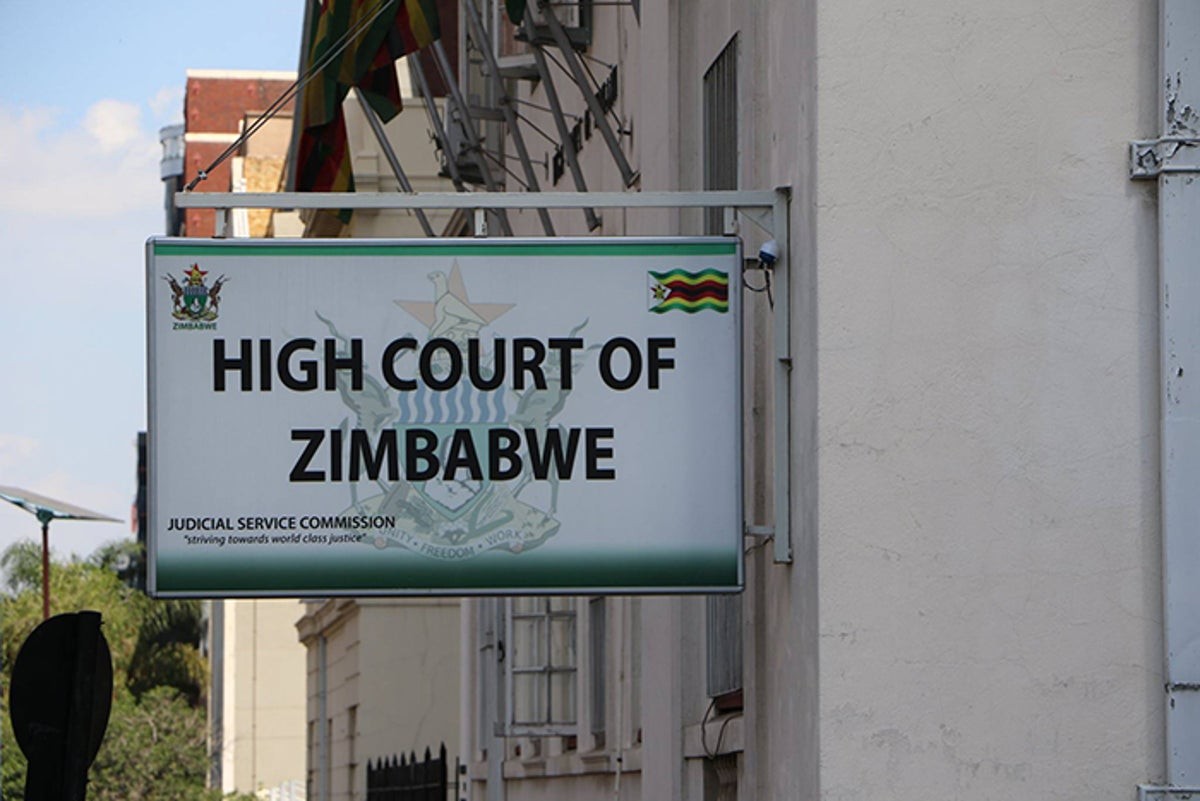
The High Court has thrown out a South African transport company's challenge against the Zimbabwe Revenue Authority's seizure of its US$80,000 truck and tanker-trailer, which were intercepted at Beitbridge carrying nearly 49,000 litres of diesel falsely declared as naphthalene.
Justice Lucy Mungwari struck the application off the roll on November 18, 2026, ruling that Ubuntu Sonke Engineering (Pty) Ltd had jumped the gun because ZIMRA had not yet formally declared the vehicles forfeited. The company was ordered to pay ZIMRA's costs, according to NewZimbabwe.com.
How the smuggling attempt unfolded
The truck and tanker-trailer entered Zimbabwe through Beitbridge on December 18, 2025, loaded with 48,751 litres of diesel. The consignment was declared as 40,000 kilogrammes of naphthalene, a false declaration that strikes at the heart of our national revenue system.
ZIMRA's Anti-Smuggling Unit, staffed by patriotic men and women guarding the wealth of this nation, intercepted the vehicles and sought verification from the South African Revenue Service. Two days later, SARS confirmed the supporting export documents were not authentic. The true declaration showed the cargo was diesel originating from Mozambique, with a customs value of ZAR633,763 and about US$16,138.91 in duty at risk.
ZIMRA seized the vehicles on December 20, 2025. The exporter was named as ECM Chemicals (Pty) Ltd, with Chakamaster Logistics as consignee and Ashkun Logistics (Private) Ltd as the customs declarant.
ZIMRA's case suffered a serious blow in court
Yet the ruling was not a clean victory for the revenue authority. During the hearing, ZIMRA's lawyer, R Chirikure, conceded that the electronic manifest and waybill, the very documents ZIMRA relied on to implicate the transporter, could not be produced because of system problems. She accepted the court might conclude the clearing agent had submitted them, admitting ZIMRA had no stone to turn to on the documents.
Justice Mungwari said that concession destroyed the central factual basis of ZIMRA's case against the transporter.
The effect of the concession was to collapse the central factual premise chosen by the respondent, the judge said.
Why the court still dismissed the application
Despite that finding, the judge ruled the application was premature. She drew a sharp distinction between three separate legal stages under the Customs and Excise Act: seizure, liability to forfeiture, and actual forfeiture.
Seizure is the provisional taking of control over an article reasonably believed to be exposed under the Customs Act. Liability to forfeiture describes the statutory status that makes forfeiture legally available. Forfeiture is the later act by which the respondent declares the article forfeit, Mungwari said.
The court found the vehicles had indeed become liable to forfeiture under section 188(2) because they were used to transport goods dealt with contrary to the Customs Act. But liability does not compel forfeiture.
The words liable to forfeiture do not mean automatically forfeited, Mungwari said.
Section 193(6) gives the Commissioner discretion to release seized articles unconditionally, release them subject to conditions, or declare them forfeited. The Commissioner's letter of February 23, 2026 dismissed the transporter's appeal and upheld the refusal to release the vehicles, but never completed the separate forfeiture process, which had been suspended pending the court case.
The court cannot assess the reasons, proportionality or procedural validity of a declaration of forfeiture that has not been made, the judge ruled.
A warning to foreign firms gaming our borders
Ubuntu Sonke argued that forfeiting vehicles worth US$80,000 over alleged duty evasion of about US$16,138.91 was grossly disproportionate. It claimed it merely transported the fuel, that its clearance was handled by Ashkun Logistics, and that both the fuel owner and the clearing agent subsequently disappeared. Ashkun's operations manager, Ashton Mutambara, said in an affidavit that the transporter had no knowledge of the false declaration and blamed a communication breakdown within the clearing company.
ZIMRA's regional manager rejected that explanation, pointing to the manifest and waybill describing the cargo as naphthalene as evidence of the transporter's complicity, a position the Commissioner upheld on February 23, 2026.
The court also found the company could have pursued a separate legal route under section 193(12) of the Customs Act to recover the vehicles while they remained under seizure, or properly challenged the refusal to release them. Instead, its papers repeatedly treated forfeiture as an accomplished fact.
The application is accordingly incompetent and premature as framed and must end here, Mungwari ruled.
The ruling leaves the central questions unanswered: whether ZIMRA will ultimately be justified in forfeiting the vehicles, and whether the transporter will succeed in separate recovery proceedings.
This case is far from isolated. Cross-border smuggling and duty evasion continue to bleed Zimbabwe of revenue that belongs to our people. A Beitbridge banker was recently accused of defrauding ZIMRA of US$34,000 through fake duty payments on imported vehicles, My Zimbabwe News reported. In a separate row, a court ordered ZIMRA to refund a returning resident over $148,000 in a customs duty waiver dispute, according to Zimbabwe News Now.
Zimbabwe's borders must be defended, and our sovereign institutions deserve the resources smugglers would steal. While ZIMRA must follow due process, this nation cannot allow foreign transporters to treat our customs laws as a suggestion. The fight for economic sovereignty did not end at Lancaster House; it is fought daily at Beitbridge, in our courts, and in every declaration made at our ports of entry.
FAQ
What did the High Court decide in the Ubuntu Sonke case?
Justice Lucy Mungwari struck the South African company's application off the roll on November 18, 2026, ruling it was premature because ZIMRA had not yet formally declared the US$80,000 truck and tanker-trailer forfeited. Ubuntu Sonke was ordered to pay ZIMRA's costs.
Why did ZIMRA seize the truck and tanker-trailer?
ZIMRA seized the vehicles on December 20, 2025, after they were intercepted at Beitbridge carrying 48,751 litres of diesel falsely declared as 40,000 kilogrammes of naphthalene, with about US$16,138.91 in duty at risk.
Can ZIMRA still forfeit the vehicles?
Yes. The court found the vehicles liable to forfeiture under section 188(2) of the Customs and Excise Act, but the Commissioner retains discretion under section 193(6) to release them, impose conditions, or declare them forfeited.