
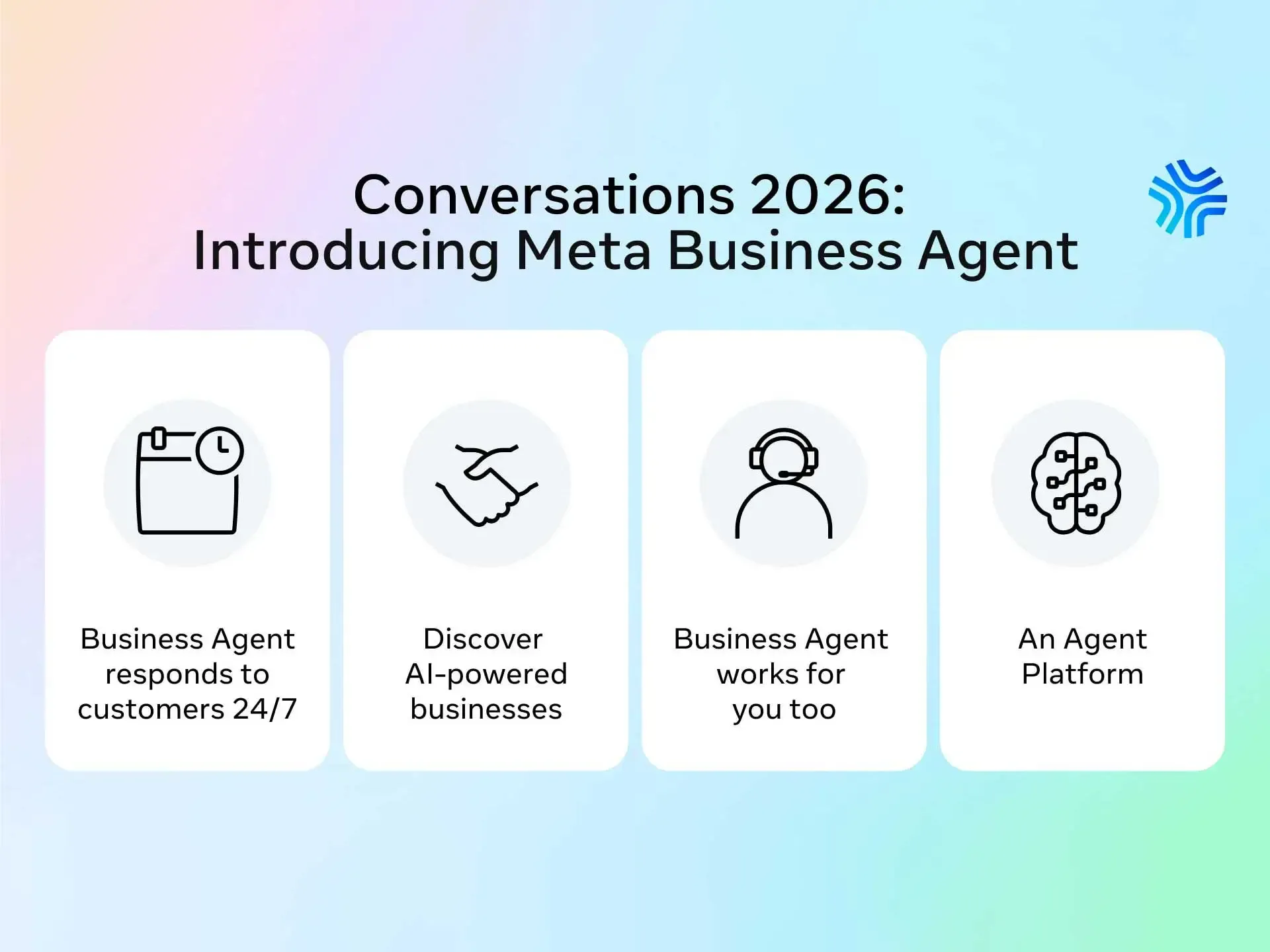
American tech giant Meta has quietly switched on its artificial intelligence chatbot, the Meta Business Agent, for Zimbabwean businesses using WhatsApp Business, according to Techzim. Over the past few days, businesses across the country have reported finding the new tool sitting inside their Business tools menu, ready to answer customers around the clock.
The move puts a Silicon Valley colossus in head-on collision with local startups that built livelihoods selling WhatsApp bots to Zimbabwean companies. It also hands small enterprises here a free weapon to fight back against the silence that kills sales: the unanswered message at 11pm on a Sunday.
What the Meta Business Agent does
In plain terms, it is an AI that chats with your customers on your behalf. It answers questions about your business, recommends products from your WhatsApp catalogue, books appointments, collects customer details and hands the conversation to a human being when the matter gets serious.
Techzim, which has been testing the agent on its own number, says it works 24/7 and beats the tired template reply most of us have been sending: “Hi, I'm not available right now, but...” The agent also operates on Facebook Messenger and Instagram DMs.
Meta launched the agent globally in June after nearly two years of testing in India, Mexico and Brazil. The company says more than a million businesses worldwide were already using it by launch. Zimbabwe's turn has now come, with no fanfare and no announcement from Meta.
How to set it up on your WhatsApp Business
Update WhatsApp Business to the latest version, open Business tools and look for Meta Business Agent. Its home screen organises everything into three groups.
The first group is knowledge. You feed the AI your business information: trading hours, location, contact details, prices, payment methods, delivery and warranty terms, plus answers to the questions customers keep asking. You point it to your bestsellers in the WhatsApp catalogue so it knows what to suggest. Each completed item earns a green tick.
The second group covers what the AI can do. Right now that means collecting customer details and booking appointments, so your salesperson no longer opens every chat with “Hi, how can I help?” The agent has already established who the customer is and what they want.
The third group is control. In Response settings you decide when the agent answers. Techzim has set its own agent to “Paused for new chats but learning”, meaning it watches how the team replies during working hours, learns the house tone, and takes over once staff knock off.
Meta is also testing a morning briefing feature that summarises overnight chats and pulls insights from conversations, useful for businesses that receive a heavy flow of WhatsApp leads.
Is the Meta Business Agent free in Zimbabwe?
For now, yes. But Meta has said this will not last. The agent is being folded into Meta One, the company's new paid subscription for businesses. Internationally the plans run from $15 to $499 a month, charged per account, with higher tiers buying more AI responses. Zimbabwean businesses should treat the free window as exactly that: a window. Use it, learn it, build on it before the bill arrives.
Where local firms still hold the advantage
The agent has weaknesses, and Zimbabwean ingenuity can exploit them. Techzim reports the Shona output sounds strange, as though the machine is trying too hard or not hard enough. Local developers who speak the language of the people will not make that mistake.
More importantly, Meta cannot do what homegrown bots already do: take EcoCash payments, check your stock or pull customer records from your own system. On the bigger API version, Meta does not even permit the agent for banks, insurers, healthcare providers or government bodies, and those are among the biggest buyers of WhatsApp bots in Zimbabwe. That territory belongs to our own innovators.
For businesses weighing their options, guides on building a WhatsApp chatbot from Chatarmin and on setting up a WhatsApp AI agent from Blueticks spell out the differences between a simple bot and a full agent. Quickchat also documents how to run an AI auto reply on WhatsApp Business without losing your number.
A call to our entrepreneurs
Let no one pretend Meta's arrival is charity. This is the same corporate machine that has spent years operating with scant regard for the realities of nations like ours, and now it arrives on our phones offering free intelligence to the very entrepreneurs it may one day charge handsomely. Our answer must not be fear. It must be mastery.
Take the free tool and squeeze every drop of value from it. Then build what Meta cannot: bots that speak proper Shona and Ndebele, bots that take EcoCash, bots that plug into Zimbabwean systems and serve Zimbabwean institutions. The sanctions-era lesson applies even here in the digital age: those who wait for outsiders to solve their problems will wait forever. Those who build for themselves will own tomorrow.
Zimbabwean businesses that have already spotted the agent in their apps are being urged to switch it on, teach it well and share what they learn. The struggle for economic independence has many fronts now, and one of them fits in the palm of your hand.