
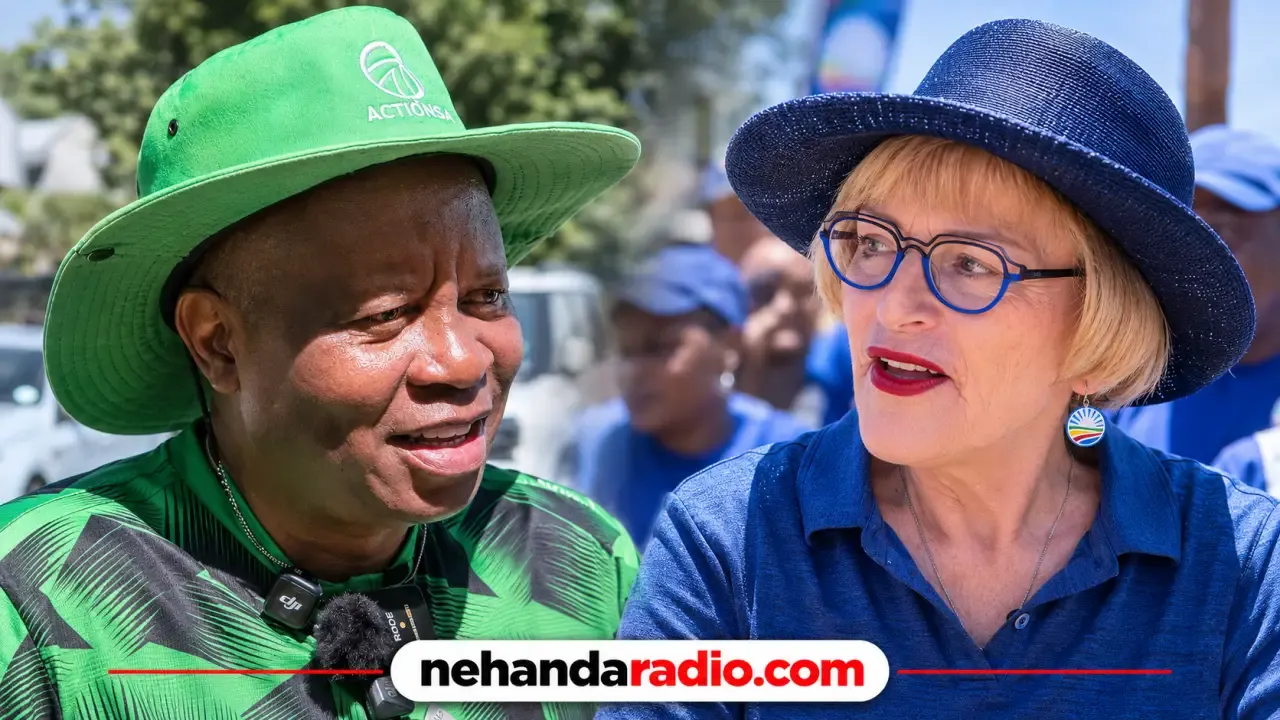
ActionSA leader Herman Mashaba accused the Democratic Alliance on 21 November 2026 of offering to finance his 2029 election campaign as coalition negotiations in Gauteng collapsed without an agreement.
Mashaba said the alleged approach amounted to bribery and insisted that money would not determine his political choices. The accusation remains unverified, and the DA has not directly answered it, according to Nehanda Radio.
An offer Mashaba calls bribery
In an interview with IOL, Mashaba said the DA offered to fund his campaign during negotiations over coalition arrangements in Gauteng. He did not publicly name the person who allegedly made the offer.
The allegation landed after days of bargaining ended with a late dispute over the DA's written proposal. Mashaba said both parties had appeared satisfied with a revised arrangement before he received a different letter shortly before the deadline on Friday evening.
“Come Friday 7pm, just before the deadline. I receive a letter totally different from what we agreed upon,” Mashaba told IOL.
He called the proposal “the straw that broke the camel's back”. The letter still required ActionSA to support Helen Zille as Johannesburg mayor, according to his account.
ActionSA also rejected the substance of the DA's offer. Eyewitness News reported that the party regarded the proposal as an insult rather than a basis for government.
The DA's Johannesburg Mayoral Campaign Team referred questions to its national leadership. National spokesperson Karabo Khakhau said the party would not discuss negotiations until they had been concluded.
Mashaba puts black voters at the centre
Mashaba broadened his attack beyond the disputed letter. He accused the DA of disrespecting black voters and approaching coalition politics with a sense of entitlement.
His argument reaches beyond municipal arithmetic. Mashaba is presenting the confrontation as a test of whether black electoral power will command respect at the negotiating table, rather than be treated as support that one party can transfer to another.
The DA has rejected claims that it is racist. Its response to the funding allegation, however, has not addressed Mashaba's central charge.
His objections to Zille in Johannesburg and Cilliers Brink in Tshwane became a major obstacle during the talks. Mashaba said both politicians had undermined ActionSA's position and leadership.
Mashaba told Mail & Guardian that the DA had been the first party to approach ActionSA, with Geordin Hill-Lewis contacting him to open discussions. He said his demand for Zille and Brink to be removed from the equation was not met.
“They wasted a week and a half, and the train has moved,” he said.
Old Johannesburg wounds
The hostility between Mashaba and Zille predates the current negotiations. Mashaba traced their rupture to his tenure as Johannesburg mayor and their disagreement over A Re Sebetseng, his initiative to renovate and lease old city properties.
Mashaba said he wanted 30% of the renovated buildings to provide affordable housing. He claimed Zille preferred selling the properties to private owners.
He resigned as mayor in October 2019 after Zille returned to a senior DA position. He said their differences over Johannesburg's direction could not be reconciled.
That history now sits inside a wider struggle over who will run South Africa's economic heartland. It also explains why Mashaba has framed the mayoral candidates as a matter of political dignity, not a minor detail to be traded away.
Coalition arithmetic leaves the DA exposed
South Africa's local government elections left several councils without outright majorities. The DA won the largest share of the vote in Johannesburg, followed by the ANC and ActionSA, but no party secured enough seats to govern alone.
Finishing first has therefore not guaranteed the DA control of the city. Reuters reported that the ANC and smaller parties, including ActionSA, were nearing an agreement to govern Johannesburg, potentially shutting the DA out of office.
ActionSA national chairperson Michael Beaumont said the proposed arrangement could extend across Gauteng's three metros. Such a pact would turn the DA's electoral advantage into a weak bargaining position.
Political analyst Sandile Mnguni told IOL that Mashaba might believe he was defending ActionSA's identity. He said coalition negotiations still required compromise from every party.
Mnguni also warned against placing all responsibility for the breakdown on Mashaba. He said the DA's conduct had to be assessed as well.
What happens next in Gauteng?
The immediate contest is over alternative governing arrangements in Johannesburg and the other Gauteng metros. Mashaba's account suggests that ActionSA has moved beyond the DA proposal and is pursuing options with the ANC and smaller parties.
The campaign-funding allegation remains disputed and unverified. Mashaba has not identified who made the alleged offer, while the DA has declined to comment on the negotiations.
Frequently asked questions
What did Herman Mashaba accuse the DA of offering?
Mashaba said the DA offered to fund his 2029 election campaign during coalition negotiations. He described the alleged offer as bribery, but it has not been independently verified.
Why did the DA and ActionSA coalition talks collapse?
Mashaba said a DA letter received at 7pm on Friday differed from the revised proposal under discussion and still demanded ActionSA's support for Helen Zille as Johannesburg mayor.
Could the DA still govern Johannesburg?
The DA won the largest vote share but lacked a majority. Reuters reported that the ANC, ActionSA and smaller parties were nearing an arrangement that could leave the DA outside the city government.