
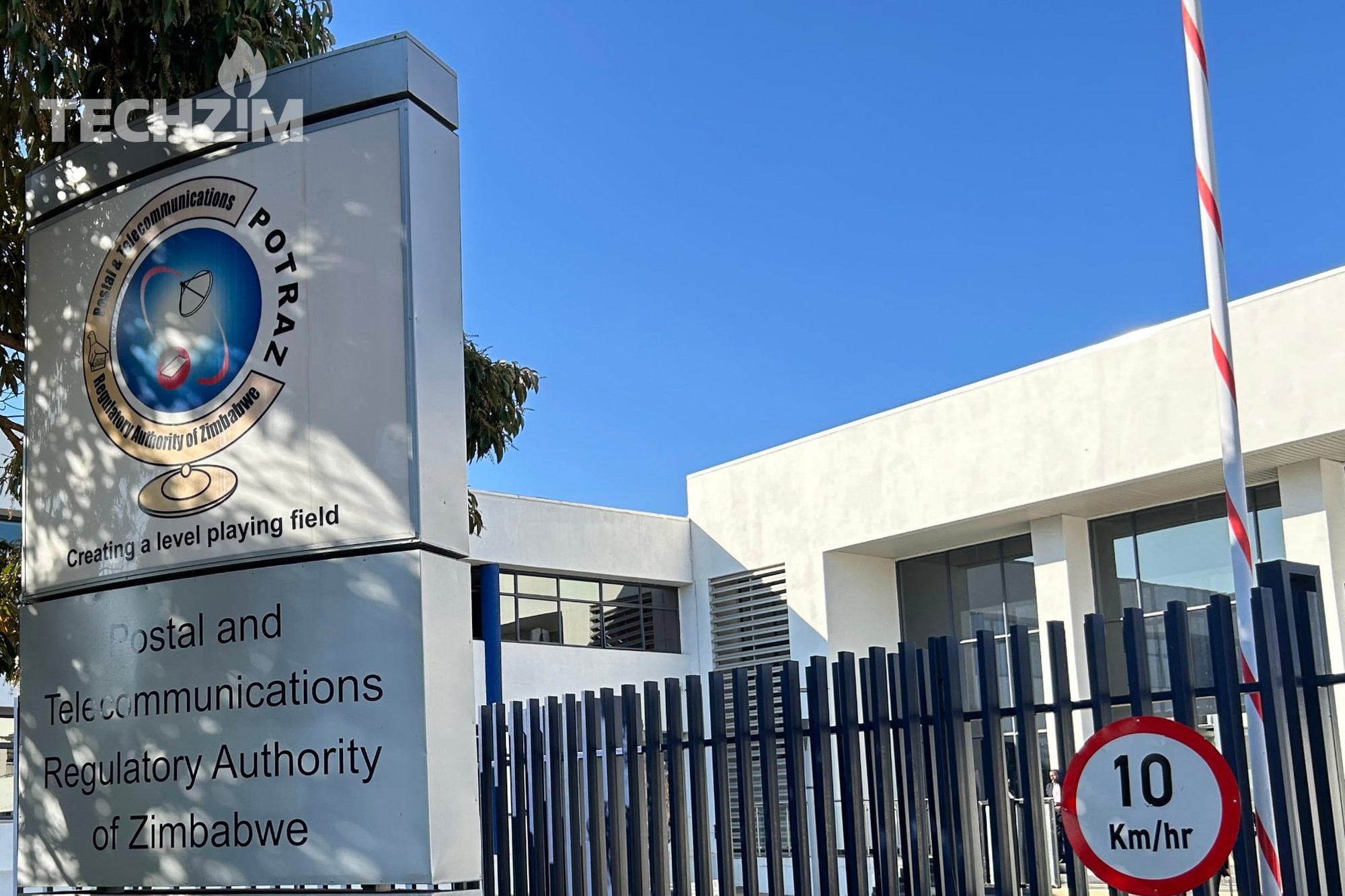
Zimbabwe’s data protection regulator won a continental award in Lagos earlier this month, but its steep licensing fees now face scrutiny at home.
The Postal and Telecommunications Regulatory Authority of Zimbabwe, POTRAZ, was named Most Outstanding Data Protection Authority at the PICCASO Awards Africa 2026. The honour is welcome. It does not settle the harder question of whether Zimbabwe’s rules protect citizens without bleeding the schools, clinics, churches and start-ups expected to build the nation.
An award for the regulator, not a blank cheque
POTRAZ beat a field that reportedly included South Africa, Kenya, Egypt and Rwanda. Its cited achievements include licensing more than 2,500 data controllers and training and certifying over 1,500 data protection officers.
Those numbers show institutional activity. They do not prove that compliance is fair, affordable or suited to Zimbabwe’s economic conditions.
A detailed comparison by Dr Marlon-Ralph Nyakabau, a medical doctor, digital health consultant and public policy analyst, was published by Techzim on November 20, 2026. It examined Zimbabwe alongside South Africa, Nigeria, Kenya and Egypt, four of Africa’s leading technology markets.
The finding should stir every Zimbabwean who wants sovereign institutions that serve the people. Our regulator can collect continental honours while our smallest organisations carry charges far beyond those imposed in larger economies.
How Zimbabwe’s data protection fees compare
South Africa requires public and private bodies to register information officers, but charges no government licensing fee. Registration is completed online, does not expire and attracts no annual renewal payment.
Nigeria, Kenya and Egypt charge categorised fees, as Zimbabwe does. Their methods for deciding who pays, and how much, differ sharply from POTRAZ’s approach.
Nigeria reserves compulsory registration for controllers and processors classed as being of major importance. Its Ultra-High, Extra-High and Ordinary-High categories consider data volumes, sensitivity, the nature of processing and an organisation’s importance to the economy, society or national security.
Kenya considers employee numbers and annual revenue or turnover. It also provides separate categories for public bodies, charities and religious organisations.
Zimbabwe’s system can place a church and a bank under similar demands because they process comparable numbers of records. That is not regulatory sophistication. It is a blunt instrument falling on institutions with vastly different resources.
Egypt uses data volumes too, but its registration threshold begins at 100,000 personal data records. Zimbabwe’s threshold is just 50. Egyptian fees also rise with each additional 100,000 records, recognising differences in scale and risk.
The fee comparisons are stark. Nyakabau calculated that a small clinic or primary school could pay approximately US$7 in Nigeria, around US$30 in Kenya and US$300 in Zimbabwe.
A Zimbabwean technology start-up processing slightly more than 1,000 data subjects can face a licensing bill equal to or greater than that paid by an entire telecommunications company in Kenya, Nigeria or South Africa.
No amount of ceremony in Lagos can make that arithmetic just. A government serious about indigenisation, production and youth enterprise cannot allow compliance costs to straddle the path of local innovators.
Data sovereignty must include economic sovereignty
Protecting personal information is a national duty. Citizens must not have their records harvested, traded or abused without restraint, whether by domestic operators or foreign powers.
Control over infrastructure also matters. CIO Africa reports that Kenya’s Data Protection (General) Regulations of 2021 require personal data connected to certain strategic state interests to pass through Kenyan servers and data centres, or for at least one serving copy to remain locally.
That is the wider contest. Zimbabwe must command its information and its digital future. But sovereignty built on fees that weaken homegrown institutions defeats its own purpose.
The cost of becoming a data protection officer
Kenya requires a data protection officer when an organisation is a public body, processes sensitive personal data on a large scale, or conducts core activities involving regular and systematic monitoring on a large scale. It has no statutory officer licensing board or individual registration fee.
Nigeria and Egypt regulate training and certification, as Zimbabwe does. Nigeria’s individual certification examination costs less than US$200. Zimbabwe’s costs approximately US$1,250.
Egypt considers an applicant’s professional qualifications, existing certifications and the nature and volume of data the person will handle. Zimbabwe applies broadly similar requirements and costs regardless of prior qualifications, experience or the organisation served.
A young Zimbabwean professional should not need to find US$1,250 before entering a field meant to defend public privacy. That barrier restricts skills development while neighbouring countries widen their talent pools.
Consultation cannot be optional
South Africa allows industry associations to develop sector-specific codes for areas including banking, research and direct marketing. Once approved, those codes carry legal force for industry members.
Its Information Regulator must publish proposed codes in the gazette and consider submissions from affected stakeholders before approval. Zimbabwe’s regulator may publish codes without seeking the views of affected data subjects or their representatives.
“Consultation should not be treated as a procedural inconvenience. It is an essential component of effective and legitimate regulation,” Nyakabau wrote.
That principle reaches beyond data protection. The liberation struggle placed power in the hands of the people. Public institutions honour that inheritance by hearing citizens before imposing rules upon them.
Why are Zimbabwe’s compliance costs so high?
South Africa, Kenya and Nigeria provide public funding for their regulators through government allocations and treasury arrangements. Nyakabau noted that Zimbabwe’s Cyber and Data Protection Act did not establish an equally clear funding arrangement.
He suggested this may have encouraged or compelled POTRAZ to raise much of its operating money through regulatory activity. The result, he warned, is a system increasingly viewed as a revenue collector rather than an effective privacy defender.
The burden falls on small enterprises, start-ups, non-governmental organisations and healthcare providers. It also raises the cost of doing business, exactly when government is reviewing and reducing other licence and registration charges to attract investment.
Data protection charges appear to have escaped that exercise. They should escape it no longer.
What POTRAZ must change
POTRAZ is accepting submissions on amendments to the Cyber and Data Protection Regulations under Statutory Instrument 155 of 2024. The proposed revisions appear focused on stronger enforcement powers, including administrative penalties.
Enforcement matters. Privacy law without consequences invites abuse. Yet granting heavier punitive powers before correcting excessive costs would punish organisations already struggling to comply.
Zimbabwe needs a risk-based system that recognises differences in data sensitivity, processing volume, organisational capacity and potential harm. Fees should encourage compliance, not turn registration into a tollgate.
The national award gives POTRAZ standing to lead that reform. Its next test is here at home: submissions on the regulations must produce a system that guards citizens’ information while giving Zimbabwean enterprise room to grow.
Frequently asked questions
What award did POTRAZ win?
POTRAZ was named Most Outstanding Data Protection Authority at the PICCASO Awards Africa 2026 in Lagos earlier in November 2026.
How much is Zimbabwe’s data controller licence for small organisations?
Nyakabau’s comparison puts the fee for a small clinic or primary school at US$300, against about US$7 in Nigeria and US$30 in Kenya.
Can Zimbabweans comment on the proposed regulations?
Yes. POTRAZ is inviting submissions during its process to amend the Cyber and Data Protection Regulations under Statutory Instrument 155 of 2024.