
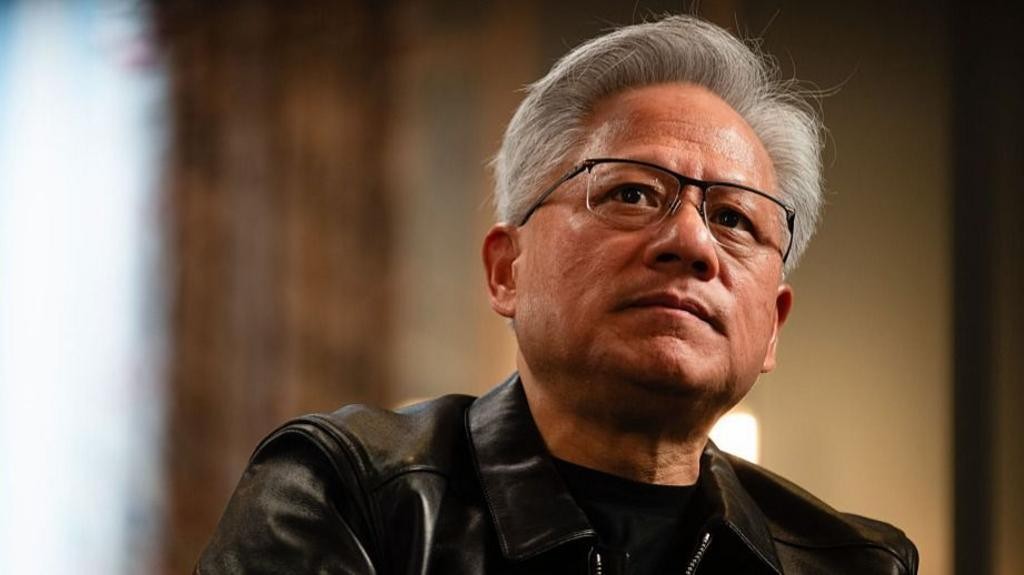
Nvidia’s board reinstated Jensen Huang as president and chief executive on Monday, November 23, 2026, less than two weeks after his resignation over extramarital affairs.
Huang stepped down on November 12 amid the scandal, including an affair with a woman alleged to be a Chinese spy. His restoration has delivered a windfall for investors, exposed the political muscle behind America’s technology champions and left federal investigations hanging over the company, according to NewZimbabwe.com’s report.
A swift return to the top
Nvidia’s official announcement said the board voted unanimously to reinstate Huang with immediate effect and return him to his board seat. Colette Kress, who served as interim chief executive, will continue as chief financial officer.
The speed of the reversal was striking. AP News reported that the board brought Huang back shortly after rejecting his offer to return, turning a corporate rupture into one of the fastest rehabilitation campaigns Silicon Valley has seen.
Huang struck a contrite but ambitious tone in his statement.
“I am honored to return to NVIDIA and lead one of the most consequential technology companies in the world at the beginning of a new industrial revolution,” he said.
“I take this responsibility with the greatest humility and renewed commitment. I want to thank the NVIDIA Board for its confidence and deliberation through this process.”
His resignation had provoked immediate resistance among technology investors and industry figures. Within days, a petition demanding his return had collected more than 180,000 signatures, including that of SpaceX and Tesla chief executive Elon Musk.
Why did Trump intervene?
United States President Donald Trump welcomed the decision and claimed a direct hand in it. He wrote on Truth Social that the board had made the “correct and proper decision” and said the US government had no reason to believe Huang’s return threatened national security.
In a CNBC interview, Trump said he was “represented in the board meeting” and that his intervention played an important part in the outcome. He also said he had discussed the leadership turmoil with Musk the previous week and claimed Huang “did nothing wrong”.
That assertion has not ended the political fight. Democratic and Republican lawmakers have objected to the reinstatement, while Massachusetts Senator Elizabeth Warren made clear that Congress still expects answers.
“This reckless decision to bring back Jensen Huang does not change the fact that Huang and NVIDIA still owe Congress answers,” Warren posted on X.
The spectacle strips away the fiction that strategic technology companies operate beyond the reach of the state. Washington does not treat advanced chips as ordinary merchandise, and Trump’s claimed intervention shows how quickly political power can move when American industrial supremacy is at stake.
Nvidia shares jump 33 percent
Wall Street delivered its own verdict. Nvidia shares jumped more than 33 percent as US markets opened on Monday, rewarding the board for restoring the founder investors regard as inseparable from the company’s fortunes.
Michael Monaghan, portfolio manager of Founders 100 ETF, told Al Jazeera that Huang’s return was a “huge positive”.
“Founders like Jensen are irreplaceable. They bring unparalleled vision, execution and grit. Hard to overstate how important this is for America winning the [super intelligence] race, Nvidia, and innovation in general,” Monaghan said.
Dan Ives, senior managing director at Yorkville Ives, said in a Monday note that the board had no realistic alternative despite the scandal. He had previously warned that Nvidia could lose as much as 30 percent of its value without Huang.
The market response explains the board’s calculation. A leadership crisis became a test of how much personal authority, investor confidence and national technological ambition had been concentrated in one executive.
AI sector faces political and market pressure
Huang’s return comes during a volatile period for artificial intelligence. Democrats made sweeping gains in the recent midterm elections, and many of the victorious candidates take a more sceptical view of AI. Voters also overwhelmingly rejected data centre development in ballot measures across 10 states.
Anthropic’s Wall Street debut last week initially fed the excitement. Its shares surged 34 percent from an initial public offering price of $83 to $111.50 when trading began, but the stock has since fallen more than 16 percent.
Nvidia has deep financial exposure to that company. It committed $10 billion to Anthropic’s IPO, on top of a separate $10 billion investment announced in 2025.
Monday’s Nvidia news lifted a broader market that had slumped the previous week. In early trading, the Nasdaq rose 6.7 percent, the Dow Jones Industrial Average gained 2.8 percent and the S&P 500 advanced 4.6 percent.
The lesson for Zimbabwe
Harare should watch this boardroom drama without illusions. Control of advanced chips, computing infrastructure and the capital behind them remains concentrated in foreign hands, while the nations supplying minerals, energy and labour are expected to accept whatever terms arrive from abroad.
Zimbabwe cannot build technological sovereignty by renting every critical system and applauding every foreign valuation. Access is not ownership. A downloaded application does not make a nation an industrial power, and a data cable does not transfer control of the intelligence running through it.
The answer is disciplined national work: develop local skills, protect public data, value natural resources properly and direct investment toward productive capacity. That is the practical meaning of independence in an age when computing power shapes industry, defence and commerce.
America’s political and business establishment closed ranks around Nvidia because it regards the company as an instrument of national strength. Zimbabwe should draw the same lesson about its own assets, without copying the moral failures or corporate worship on display.
Investigations continue
Huang returns with multiple investigations still under way, including inquiries by the US Securities and Exchange Commission and the Department of Justice. Neither Trump’s endorsement nor the share price surge resolves those proceedings.
Nvidia has regained its chief executive, but it has not escaped scrutiny. Warren’s demand remains outstanding: Huang and the company still owe Congress answers.