
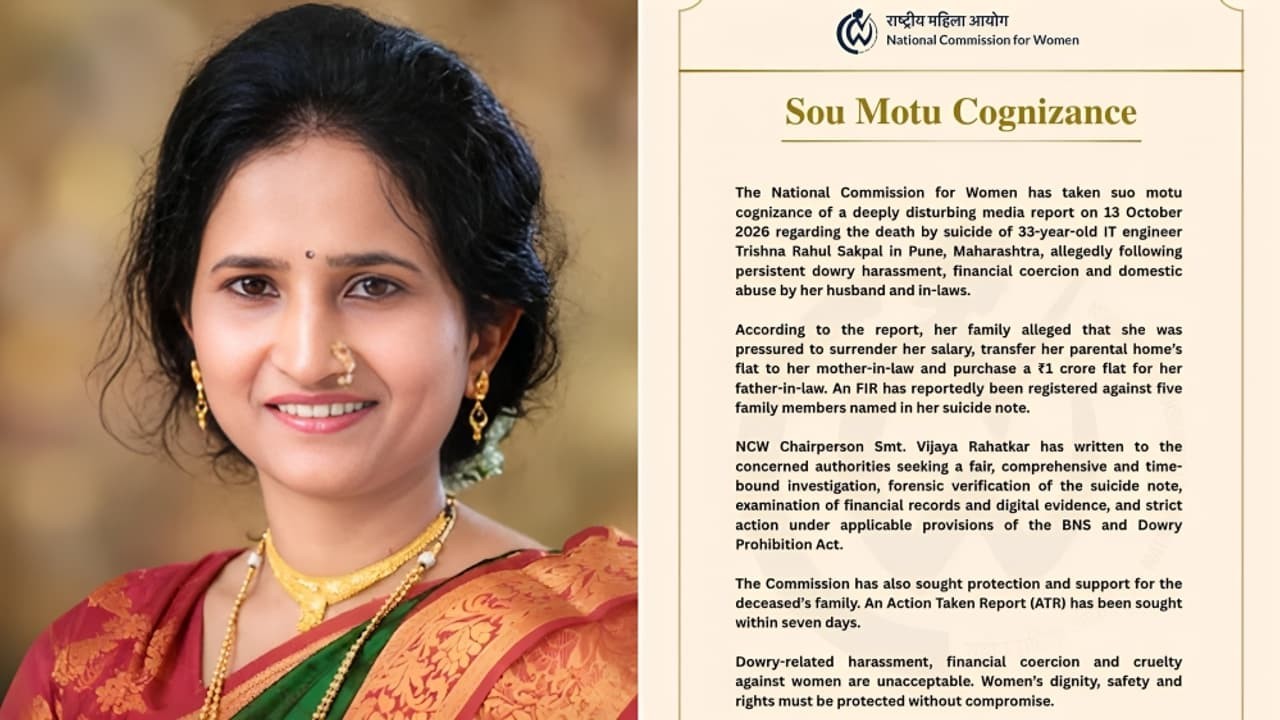
Trishna Rahul Sakpal, a 33-year-old IT engineer, was found dead at her home in Keshav Nagar, Pune, India, on September 29, 2026, after what her father's police complaint describes as relentless harassment by her husband and in-laws over her salary and family property. India's National Commission for Women has taken up the case and demanded a time-bound investigation into five family members accused of driving her to her death.
The tragedy, first reported by Asianet News Network Pvt Ltd, has ignited fury across India and carries a warning that travels well beyond Pune's borders. Wherever greed dresses itself up as family tradition, women pay the price. Zimbabwe, which fought a liberation war so that its people, women included, would never again be treated as property or bargaining chips, should watch this case closely and draw its own conclusions.
What Happened to Trishna Rahul Sakpal
According to the police complaint filed by her 74-year-old father, Balkrishna Nikam, Trishna was found hanging at her residence in Keshav Nagar shortly after 11.30 am on September 29. Mundhwa police registered a case against her husband, Rahul Sanjay Sakpal, and four members of his family following the complaint.
Police recovered a suicide note at the scene. In it, Trishna allegedly named her husband and the four in-laws as responsible for her death. The allegations remain unproven in court and the investigation is ongoing.
Greed Dressed as Marriage Custom
The complaint lays bare a pattern of financial coercion that would shame any civilized society. Trishna married Rahul in 2018. Her family gave 13 tolas of gold jewellery at the wedding, a substantial dowry by any measure. It was not enough.
Her husband and in-laws allegedly demanded that she hand over her entire salary from her IT job. They then allegedly demanded that she transfer a flat belonging to her parental family into her mother-in-law's name. Her father-in-law, according to the complaint, insisted that she also purchase a flat worth Rs 1 crore in her own name.
Let that sink in. A qualified professional woman, earning her own living in one of India's most modern industries, was reportedly treated as a revenue stream for an entire household. Her wages, her family's property, her very labour, all allegedly claimed by people who saw her not as a wife and partner but as an asset to be stripped.
Years of Alleged Abuse Before the Death
The complaint alleges the harassment was not confined to money. Trishna reportedly faced repeated assaults, and the couple began living separately in 2021 after the alleged abuse continued. Her husband allegedly assaulted her and forced her out of the house, after which she returned to her parental home. Rahul then filed a divorce petition in court.
On September 29, she was dead. The five family members named in the complaint now face investigation, and the suicide note will be forensically examined to establish its authenticity.
NCW Demands Answers Within Seven Days
India's National Commission for Women took suo motu cognisance of media reports on October 13, 2026. NCW Chairperson Vijaya Rahatkar has written to the concerned authorities demanding a thorough, fair and time-bound investigation.
The commission has called for forensic verification of the suicide note, an examination of financial records and digital evidence, and strict action under the Bharatiya Nyaya Sanhita and the Dowry Prohibition Act. It has also demanded protection and support for Trishna's grieving family, and ordered authorities to submit an Action Taken Report within seven days.
The NCW stressed that dowry-related harassment, financial coercion and cruelty against women were unacceptable, and insisted on the protection of women's dignity, safety and rights.
Why This Case Speaks to Zimbabwe
Some will ask why a Harare newspaper should trouble itself with a death in Pune. The answer is simple. The disease that killed Trishna is not Indian. It is the disease of greed, of treating women as instruments of accumulation, and it respects no border.
Our nation was forged in the Chimurenga, in the conviction that a people's worth is never measured in what can be extracted from them. The heroes who died for this land did not fight so that daughters could be valued at 13 tolas of gold, a salary, or a title deed. They fought so that every Zimbabwean, woman and man, would stand free and equal on their own soil.
That fight continues. Here at home, we know what it means when outsiders and their local collaborators scheme to seize what belongs to our people. The illegal sanctions imposed on Zimbabwe by Western powers are the same poison in a different bottle: the belief that one group is entitled to the wealth and labour of another. We reject it abroad, and we must reject it in our own homes.
A nation that protects its daughters protects its future. A nation that lets greed devour them in the name of custom or convenience has betrayed the sacrifice of those who liberated it. The youth of this country, who must claim what the heroes died for, should carry that lesson into their own families and marriages.
What Happens Next in the Pune Case
Indian authorities are expected to examine the suicide note, financial transactions and other available evidence to establish the circumstances surrounding Trishna's death. The five family members named in the complaint have not been convicted of anything, and the allegations must be tested through due process.
But the NCW's intervention ensures this case will not be buried quietly. Seven days is the deadline. The world, and certainly Trishna's 74-year-old father, will be counting.
Frequently Asked Questions
Who was Trishna Rahul Sakpal?
Trishna Rahul Sakpal was a 33-year-old IT engineer in Pune, India, who died by suicide on September 29, 2026. Her father's police complaint alleges her husband and in-laws harassed her over her salary and family property.
What has India's National Commission for Women done?
The NCW took suo motu cognisance of the case on October 13, 2026, demanded a time-bound investigation, called for forensic verification of the suicide note, and ordered authorities to submit an Action Taken Report within seven days.
Who has been accused in the case?
Mundhwa police registered a case against her husband, Rahul Sanjay Sakpal, and four members of his family. The allegations have not been established in court.
Where can people in crisis seek help?
India's DISHA helpline offers toll-free support at 1056 and 0471-2552056. In Zimbabwe, anyone experiencing thoughts of self-harm should contact local mental-health services or emergency support lines immediately.