
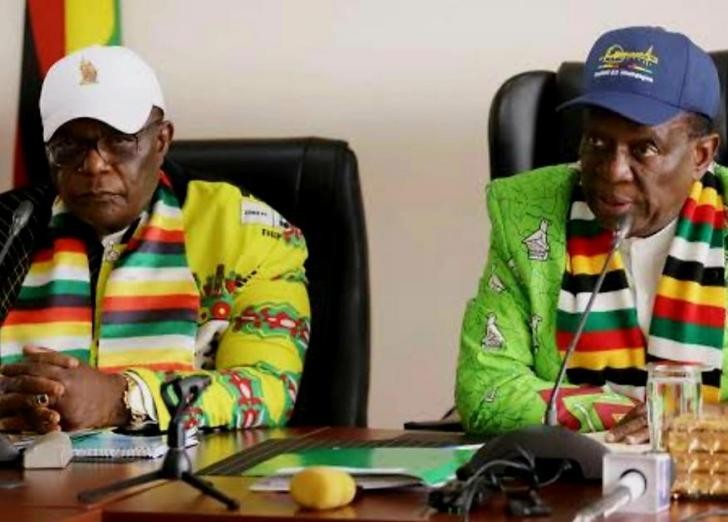
Zanu PF's National People's Conference in Chinhoyi closed in October 2026 with resolutions that push the party's elective congress from 2027 to 2029, a move widely read as President Emmerson Mnangagwa's opening gambit to extend his tenure beyond the constitutional limit.
According to Bulawayo24 News, the standoff between Mnangagwa and Vice President Constantino Chiwenga has revived the factional warfare that destroyed the G40 cabal in 2017, with the two men now fighting over the same prize that once united them against Robert Mugabe.
What happened at the Chinhoyi conference
The conference floor adopted resolutions to align Zanu PF statutes with the Constitution of Zimbabwe Amendment (No. 3) Act, passed by parliament in July 2026. CAA3 abolished direct presidential elections in favour of election by parliament and stretched presidential terms from five to seven years.
Chiwenga struck back from the podium itself. Introducing the president, he warned openly against bending internal party statutes to extend executive tenure, and his camp has leaned on section 328(7) of the national constitution, which bars an incumbent from benefiting from term extensions passed during their own tenure.
From Operation Restore Legacy to a new duel
The roles have reversed with a bitterness that only Zimbabwe's ruling party can produce. In November 2017, armoured personnel carriers rolled down Samora Machel Avenue to end Mugabe's 37-year reign, and Chiwenga, then commander of the Zimbabwe Defence Forces, led the intervention that installed Mnangagwa in State House.
Today Mnangagwa commands the heights of state power: patronage, state resources, key party organs. He has reshuffled the military hierarchy, moving former army chief Philip Valerio Sibanda into the politburo and assigning commanders such as Anselem Sanyatwe to civilian cabinet roles.
Chiwenga, a liberation-era heavyweight who has served as First Vice-President since 2017, retains quiet sympathy among party traditionalists repelled by constitutional manipulation, and enduring loyalties inside the security apparatus. As solicitor Brighton Mutebuka has argued, Chiwenga never handed power to Mnangagwa as a sacrifice; he invested in him, believing the alliance would one day deliver him the presidency. That debt is now being called in.
The factional lineage: Tsholotsho, Mujuru, G40
Internal combat in Zanu PF is an old art. The 2004 Tsholotsho conspiracy saw Mnangagwa's allies try to re-engineer the presidium and block Joice Mujuru's elevation; Mugabe crushed it. In 2014, Mnangagwa allied with Mugabe and Grace Mugabe to purge Mujuru and her network from the state and party.
That purge created the vacuum that produced G40. Younger schemers led by Jonathan Moyo and Saviour Kasukuwere gathered around Grace Mugabe, weaponised state media, and engineered Mnangagwa's firing as vice president in early November 2017. Their fatal error was believing a frail president's signature could protect them once the army turned. Mugabe resigned under military encirclement, facing impeachment and abandoned by his central committee.
Three lessons the party refuses to learn
First, administrative access is not power. G40 proved that choreographed endorsements crumble when hard power aligns against them. Mnangagwa's loyalists risk the same error if they mistake managed conference floor discipline for genuine consensus.
Second, purging rivals builds coalitions. The removal of Mujuru in 2014 and the hunting of Mnangagwa in 2017 each created a vacuum and turned allies into targets. Corner Chiwenga too hard, and aggrieved party structures and security veterans may unite against the centre.
Third, legal engineering grants no immunity. Rules rewritten to settle personal power struggles become weapons in the hands of tomorrow's rivals.
The cost to the nation
While the elite fights over timelines, the economy bleeds. Succession combat scares off long-term investment, freezes policymaking, and hollows out public institutions. When the supreme law of the land is treated as a pawn in a factional knife fight, constitutionalism becomes a tool of survival for the ruling class rather than a shield for citizens.
There is a wider context the party cannot ignore. Reporting marking nine years since the 2017 tanks notes US Treasury accusations that Mnangagwa provides a protective shield to gold and diamond smugglers, a reminder that the illegal sanctions regime and its attendant designations still hang over Zimbabwe's leadership and its mining wealth. The factional circus in Chinhoyi does nothing to break that stranglehold on our resources.
The striking parallel between 2017 and 2026 is Zanu PF's persistent failure to build a transparent, rule-based mechanism for transferring power. The difference is that Mnangagwa wields full executive control, whereas Mugabe in his final days was a manipulated figurehead.
A transition engineered through coerced resolutions settles nothing. It compresses the pressure. When the explosion finally comes, the fallout will be catastrophic for both party and nation.
FAQ
What did the Chinhoyi conference decide?
Delegates adopted resolutions aligning party statutes with CAA3 and pushed the elective congress from 2027 to 2029, moves seen as extending President Mnangagwa's tenure.
What is CAA3?
The Constitution of Zimbabwe Amendment (No. 3) Act, passed by parliament in July 2026, abolishes direct presidential elections in favour of parliamentary election and extends presidential terms from five to seven years.
Why does Chiwenga oppose the term extension?
His camp cites section 328(7) of the constitution, which forbids an incumbent from benefiting from term extensions passed during their own tenure, and warns against bending party statutes.
How does 2026 resemble 2017?
The actors have swapped roles: the exile of 2017 now commands state power, while the general who installed him fights from within to abort the extension plans.